
Product Description
Good Quality Flexible Beam Coupling for CNC Machine
Description of Good Quality Flexible Beam Coupling for CNC Machine
1. One-piece metallic beam coupling
2. Zero backlash, flexible shaft
3. Spiral and parallel cut designs available
4. Accommodates misalignment and shaft endplay
5. Identical clockwise and counterclockwise rotation
6. Available in aluminum or stainless steel
7. Multiple bore and shaft connecting configurations
Parameter of Good Quality Flexible Beam Coupling for CNC Machine
|
Model |
D (mm) |
L (mm) |
d1-d2 (mm) |
hex screw |
L1 (mm) |
L2 (mm) |
L3 (mm) |
Fasten Torque (n.m) |
|
LR-D-D15L20 |
15 |
20 |
3.0-8.0 |
M3. |
2.5 |
2 |
0.4 |
1.2 |
|
LR-D-D19L25 |
19 |
25 |
6.0-10.0 |
M3. |
3 |
2 |
0.4 |
1.2 |
|
LR-D-D25L30 |
25 |
30 |
8.0-12.0 |
M4 |
4 |
2 |
0.4 |
2.5 |
|
LR-D-D30L35 |
30 |
35 |
8.0-18.0 |
M4 |
4 |
2.5 |
0.5 |
2.5 |
|
LR-D-D35L40 |
35 |
40 |
8.0-22.0 |
M5 |
5 |
2.5 |
0.5 |
5 |
|
LR-D-D40L45 |
40 |
45 |
10.0-28.0 |
M6 |
6 |
3.5 |
0.6 |
8 |
|
Model |
Max bore (mm) |
Rated Torque (n.m) |
Max Torque (n.m) |
Max speed (rpm) |
Moment of Inertia (kg.m2) |
Permissible Radial Deviation (degree) |
Permissible Angular Deviation (degree) |
|
LR-D-D15L20 |
8 |
0.5 |
1 |
30000 |
2.5*10-7 |
0.05 |
0.5 |
|
LR-D-D19L25 |
10 |
1 |
2 |
25000 |
5.8*10-7 |
0.05 |
0.5 |
|
LR-D-D25L30 |
12 |
1.5 |
3 |
18000 |
1.8*10-6 |
0.05 |
0.5 |
|
LR-D-D30L35 |
18 |
2 |
4 |
16000 |
4.7*10-6 |
0.05 |
0.5 |
|
LR-D-D35L40 |
22 |
3 |
6 |
14000 |
1.1*10-5 |
0.05 |
0.5 |
|
LR-D-D40L45 |
28 |
6 |
12 |
12000 |
2.3*10-5 |
0.05 |
0.5 |
|
Model |
D (mm) |
L (mm) |
d1-d2 (mm) |
Fasten Torque (n.m) |
|
LT-D-D15L20 |
15 |
20 |
4.0-5.0 |
0.7 |
|
LT-D-D19L25 |
19 |
25 |
6.0-10.0 |
0.7 |
|
LT-D-D25L30 |
25 |
30 |
8.0-12.0 |
0.7 |
|
LT-D-D30L35 |
30 |
35 |
8.0-18.0 |
1.7 |
|
LT-D-D35L40 |
35 |
40 |
8.0-22.0 |
4 |
|
LT-D-D40L45 |
40 |
45 |
10.0-28.0 |
4 |
|
Model |
Max bore (mm) |
Rated Torque (n.m) |
Max Torque (n.m) |
Max speed (rpm) |
Moment of Inertia (kg.m2) |
Permissible Radial Deviation (degree) |
Permissible Angular Deviation (degree) |
|
LT-D-D15L20 |
5 |
0.5 |
1 |
30000 |
2.5*10-7 |
0.05 |
0.5 |
|
LT-D-D19L25 |
10 |
1 |
2 |
25000 |
5.8*10-7 |
0.05 |
0.5 |
|
LT-D-D25L30 |
12 |
1.5 |
3 |
18000 |
1.8*10-6 |
0.05 |
0.5 |
|
LT-D-D30L35 |
18 |
2 |
4 |
16000 |
4.7*10-6 |
0.05 |
0.5 |
|
LT-D-D35L40 |
22 |
3 |
6 |
14000 |
1.1*10-5 |
0.05 |
0.5 |
|
LT-D-D40L45 |
28 |
6 |
12 |
12000 |
2.3*10-5 |
0.05 |
0.5 |
/* January 22, 2571 19:08:37 */!function(){function s(e,r){var a,o={};try{e&&e.split(“,”).forEach(function(e,t){e&&(a=e.match(/(.*?):(.*)$/))&&1
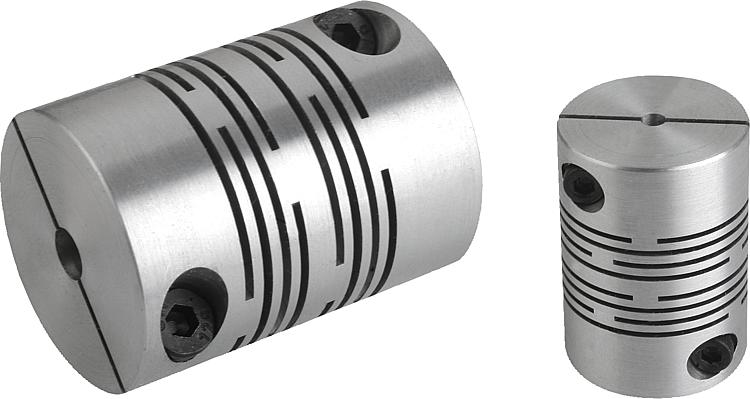
Comparison of Beam Couplings to Other Coupling Types in Terms of Backlash and Torsional Stiffness
When considering coupling options for motion control systems, two critical performance characteristics to evaluate are backlash and torsional stiffness. Backlash refers to the amount of rotational play or free movement between the connected shafts, while torsional stiffness indicates a coupling’s ability to resist torsional deformation when transmitting torque. Let’s compare beam couplings to other common coupling types in terms of these factors:
- Beam Couplings:
Beam couplings generally exhibit low to minimal backlash due to their single or multiple helical beam design. The helical beams provide some flexibility to accommodate misalignment, but they maintain a relatively tight connection between the shafts, resulting in low backlash. This characteristic is especially valuable in precision motion control applications where eliminating play is essential for accurate positioning.
In terms of torsional stiffness, beam couplings offer moderate to high values. The helical beams provide good torsional rigidity, making them suitable for applications that demand precise torque transmission and minimal torsional deflection. However, compared to other types like disc or jaw couplings, beam couplings may have slightly lower torsional stiffness.
- Disc Couplings:
Disc couplings are known for their excellent torsional stiffness, providing robust torque transmission and minimal torsional deformation. They are ideal for applications requiring high precision and where torsional rigidity is critical.
Regarding backlash, disc couplings typically have low to negligible values. Their design allows for precise and direct transmission of torque between the shafts, resulting in minimal rotational play.
- Jaw Couplings:
Jaw couplings offer low to moderate torsional stiffness, making them suitable for applications with moderate torque requirements. They provide some flexibility to handle misalignment, but their torsional rigidity is not as high as disc couplings or certain types of beam couplings.
Backlash in jaw couplings can vary depending on the specific design and materials. Some jaw couplings may have slightly more backlash compared to beam or disc couplings due to the elastomeric spider element used in their construction.
- Oldham Couplings:
Oldham couplings offer low backlash performance due to their unique three-piece design, which incorporates two outer hubs and a middle disk. The design allows for consistent torque transmission and minimal play between the shafts.
Torsional stiffness in Oldham couplings is moderate, providing a balance between flexibility and rigidity. While not as rigid as disc couplings, they still offer reliable torque transmission for various motion control applications.
In summary, beam couplings offer low to minimal backlash and moderate to high torsional stiffness, making them suitable for precision motion control applications that require a balance between flexibility and rigidity. Disc couplings provide excellent torsional stiffness and low backlash, making them an ideal choice for high-precision applications. Jaw couplings and Oldham couplings offer moderate performance in both backlash and torsional stiffness and are well-suited for applications with moderate torque and misalignment compensation requirements.
When selecting a coupling type, consider the specific needs of your application, such as the required precision, torque capacity, and misalignment compensation. Each coupling type has its advantages and limitations, and choosing the right one will contribute to the overall performance and reliability of your motion control system.
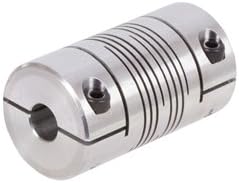
Contribution of Beam Couplings to Overall Efficiency and Reliability of Motion Systems
Beam couplings play a crucial role in enhancing the overall efficiency and reliability of motion control systems in various industrial applications. Their unique design and material properties contribute to these advantages in several ways:
- High Torque Transmission:
Beam couplings provide efficient torque transmission between shafts, allowing for precise and reliable power transfer. They can handle high torque loads without introducing backlash or slippage, ensuring accurate motion control and consistent performance.
- Flexibility and Misalignment Compensation:
Beam couplings offer flexibility, allowing them to accommodate small shaft misalignments. This characteristic reduces stress on the connected components and bearings, minimizing wear and enhancing the system’s overall reliability.
- Low Inertia:
Due to their lightweight design, beam couplings have low inertia, which means they have minimal impact on the system’s acceleration and deceleration. This low inertia helps in achieving faster response times and smoother motion profiles, improving the overall efficiency of the system.
- Vibration Dampening:
Beam couplings dampen vibrations and absorb shocks generated during operation. By reducing vibrational energy transmission, they minimize the risk of resonance and prevent premature wear or damage to the motion system components.
- Wide Range of Sizes and Materials:
Manufacturers offer beam couplings in various sizes and materials to suit different application requirements. This versatility allows for optimal coupling selection based on factors such as torque capacity, shaft diameter, and environmental conditions, ensuring an efficient and reliable coupling solution.
- Easy Installation and Maintenance:
Beam couplings are relatively simple to install and maintain. Their clamp or set screw mounting methods simplify the coupling assembly process. Additionally, routine maintenance, such as lubrication and visual inspections, helps extend their lifespan and ensures continuous system reliability.
- Non-Magnetic and Electrical Isolation Options:
Some beam couplings are available in non-magnetic materials, such as plastic or brass, which are suitable for applications where magnetic interference must be minimized. Additionally, plastic couplings offer electrical isolation properties, making them useful in applications requiring electrical insulation.
Overall, beam couplings contribute significantly to the overall efficiency and reliability of motion systems by providing precise torque transmission, compensating for misalignment, minimizing vibrations, and offering a broad range of options to meet diverse application needs. Their durable construction and ease of installation make them a dependable choice for motion control in various industrial settings.
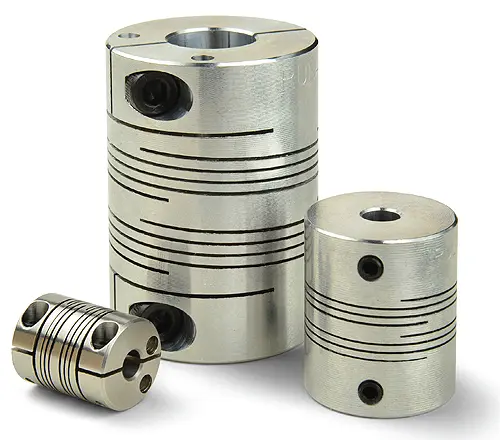
Handling Misalignment and Compensating for Shaft Offset in Beam Couplings
Beam couplings are designed to handle misalignment between connected shafts and compensate for shaft offset in motion control systems. Their flexible and helical beam structure allows them to accommodate various types of misalignment, ensuring smooth and reliable operation. Here’s how beam couplings handle misalignment and compensate for shaft offset:
- Helical Beam Design:
Beam couplings consist of one or more helical beams, which are thin, flexible metal strips arranged in a helix shape. The helical beam design gives beam couplings their characteristic flexibility, allowing them to bend and twist in response to misalignment and shaft offset.
- Angular Misalignment:
If the connected shafts are not collinear and are at an angle to each other, it results in angular misalignment. Beam couplings can handle angular misalignment by allowing the helical beams to flex, bending at an angle to accommodate the misaligned shafts. The flexibility of the beams enables the coupling to transmit torque smoothly even when the shafts are not perfectly aligned.
- Axial Misalignment:
Axial misalignment occurs when the two shafts are not on the same axis or are not aligned in the same line. Beam couplings can compensate for axial misalignment by permitting the helical beams to elongate or compress in the axial direction. This axial flexibility allows the coupling to accommodate the offset between the shafts without causing excessive stress on the components.
- Parallel Misalignment:
Parallel misalignment refers to the situation where the two shafts are not at the same height or parallel to each other. Beam couplings handle parallel misalignment by permitting the helical beams to shift laterally. This lateral movement allows the coupling to adjust to the offset between the shafts and maintain an effective connection.
- Compensation Range:
Beam couplings have a specified range of misalignment they can accommodate. The amount of misalignment they can handle depends on the number of helical beams and the design of the coupling. Multi-beam couplings typically have a higher misalignment compensation range compared to single-beam couplings, making them more suitable for applications with more significant misalignment requirements.
- Limitations:
While beam couplings can compensate for a certain degree of misalignment, they do have limitations. Excessive misalignment beyond the coupling’s rated capacity can lead to premature wear, increased stress on the components, and reduced coupling performance. It’s essential to operate the beam coupling within its specified misalignment limits to ensure optimal functioning and longevity.
In summary, beam couplings handle misalignment and compensate for shaft offset by virtue of their flexible helical beam design. The ability to bend, twist, elongate, and shift laterally enables them to accommodate angular, axial, and parallel misalignment in motion control systems. Choosing the appropriate beam coupling type and staying within its rated misalignment range are essential to ensure effective compensation and reliable operation in various applications.


editor by CX 2024-05-03