

China Standard Flexible Beam Shaft Spring Type Clamping Screw-up Beam Coupling lowes air compressor
Product Description
The China Standard Flexible Beam Shaft Spring Type Clamping Screw-up Beam Coupling lowes air compressor offers a range of hub and element selection to meet different demands. It can absorb shock and cater for incidental misalignment and damp out small amplitude vibrations. With NBR, Urethane, and Hytrel elements, customization is also available.
Main Products:
- Timing Belt Pulley (Synchronous Pulley), Timing Bar, Clamping Plate
- Forging, Casting, Stamping Part
- V Belt Pulley and Taper Lock Bush; Sprocket, Idler and Plate Wheel; Spur Gear, Bevel Gear, Rack
- Shaft Locking Device: could be an alternative for Ringfeder, Sati, Chiaravalli, Tollok, etc.
- Shaft Coupling: including Miniature couplings, Curved tooth coupling, Chain coupling, HRC coupling, Normex coupling, Type coupling, GE Coupling, torque limiter, Universal Joint
- Shaft Collars: including Setscrew Type, Single Split, and Double Splits
- Gear & Rack: Spur gear/rack, bevel gear, helical gear/rack
- Other customized Machining Parts according to drawings (OEM) Forging, Casting, Stamping Parts
Packing
| Packaging | |
| Packing | We use standard export wooden case, carton, and pallet, but we can also pack it as per your special requirements. |
FAQ
Q: Are you a trading company or manufacturer?
A: We are a factory.
Q: How long is your delivery time?
A: Generally, it is 5-10 days if the goods are in stock. If the goods are not in stock, it is 15-20 days according to quantity.
Q: Do you provide samples? Is it free or extra?
A: Yes, we could offer the sample for free charge but do not pay the cost of freight.
Q: What is your terms of payment?
A: Payment<=1000USD, 100% in advance. Payment>=1000USD, 30% T/T in advance, balance before shipment.
Q: Can I customize products with drawings and samples?
A: Yes, we welcome customers to customize products according to their drawings and samples.
Our company mainly supplies various industrial products, such as agricultural gearboxes, power output shafts, sprockets, hydraulic couplings, worm gear reducers, racks, roller chains, pulleys, planetary gearboxes, timing pulleys, bushings, etc. We offer high-quality products, preferential prices, and thoughtful services. Customers are welcome to customize with drawings and samples.
All content on this page is from the Internet and is only intended as a reference for product selection. Our products are replacement parts and not original spare parts. We are not the holder of the original trademarks of the content. Our replacement parts can be perfectly adapted to the original spare parts. If you need to buy original spare parts, please contact the original factory to buy.
Performance Characteristics of Beam Coupling
Beam Couplings are an important mechanical component that is used for connecting shafts in various machines. Some of the key performance characteristics of Beam Couplings are:
- High torsional stiffness
- Excellent misalignment compensation
- Low inertia
- High speed capabilities
- Long life
- Low maintenance
Types and Characteristics of Beam Coupling
Beam Couplings can be classified into different categories based on their design, material, and application. The common types of Beam Couplings include:
- Multi-beam couplings
- Single-beam couplings
- Bellows couplings
- Oldham couplings
Each type of Beam Coupling has its own unique characteristics and advantages. For example, Multi-beam couplings are known for their high torque capacity and excellent stiffness, while Bellows couplings are used in applications that require high precision and low backlash.
Advantages of Beam Coupling Made of Different Materials
Beam Couplings can be made from different materials such as aluminum, stainless steel, and plastic. Each material has its own advantages, for example:
- Aluminum Beam Couplings are lightweight and have low inertia, making them suitable for high-speed applications.
- Stainless Steel Beam Couplings have high strength and can handle high torque loads.
- Plastic Beam Couplings are corrosion-resistant and low-cost, making them ideal for use in harsh environments.
Application of Beam Coupling in Various Fields
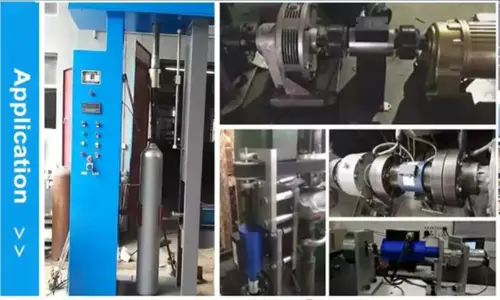
Beam Couplings are used in many different applications across various industries. Some of the industries that use Beam Coupling include:
- Encoders and Resolvers
- CNC Machines
- Medical Devices
- Robotics
- Office Automation Equipment
The use of Beam Coupling in these industries reflects its value and importance in various fields.
Future Development Trends and Opportunities of Beam Coupling Products
The development of Beam Coupling products is constantly evolving as new materials and designs become available. Some of the future trends and opportunities in the industry include:
- The development of new materials such as composites and alloys that offer better performance characteristics.
- The use of advanced manufacturing techniques such as 3D printing to create more complex designs and shapes.
- The increased demand for Beam Coupling products in emerging markets such as Asia and Africa.
How to Choose a Suitable Beam Coupling
Choosing the right Beam Coupling for your application is essential for ensuring optimal performance and reliability. Some of the factors that should be considered when selecting a Beam Coupling include:
- Torque Requirements
- Misalignment Tolerance
- Operational Speed
- Environmental Conditions
- Space Constraints
- Installation
By carefully considering these factors, you can choose a Beam Coupling that is best suited for your specific application.
Conclusion
Beam Couplings are an important mechanical component that is used for connecting shafts in various machines. They offer high torsional stiffness, excellent misalignment compensation, low inertia, and other key performance characteristics that make them ideal for use in many different applications across various industries. When selecting a Beam Coupling, it is important to carefully consider factors such as torque requirements, misalignment tolerance, operational speed, environmental conditions, space constraints, and installation.